How to Identify a Fake Jai Club Login Website for Safe Access
Learn practical tips to identify fake Jai Club login websites, protect your account security, and avoid scams and phishing links in India.
In this article
- How to Identify a Fake Jai Club Login Website
- 1. Check the Website URL Carefully
- What to look out for:
- Why it matters:
- 2. Verify the Website's Design and Functionality
- What to look for:
- Why it matters:
- 3. Cross-Check with Official Jai Club Sources
- How to verify:
- Why it matters:
- 4. Beware of Requests for Unusual or Excessive Personal Information
- What to look for:
- Why it matters:
- 5. Recognize Signs of a Jai Club Phishing Link
- How to identify a phishing link:
- Why it matters:
- 6. Use Browser Security Features and Antivirus Tools
- Tips:
- Why it matters:
- 7. Check for Contact Info and Customer Support Options
- What to verify:
- Why it matters:
- Summary of Key Signs of a Fake Jai Club Login Website
How to Identify a Fake Jai Club Login Website
With the popularity of Jai Club in India growing, scammers are increasingly creating fake Jai Club login websites to trick users into revealing their account details.
Falling for a fake site can lead to account theft, financial loss, and identity theft. Knowing how to spot these fraudulent sites is essential for maintaining your Jai Club account security.
This guide highlights key signs to identify a fake Jai Club login website, helping you stay protected from scams, phishing links, and potential Jai Club login scams.
1. Check the Website URL Carefully
One of the simplest ways to spot a fake Jai Club login website is by examining the URL. Scammers often create websites that look similar to the legitimate site but have minor differences in their URLs.
What to look out for:
- Misspelled domain names: Fake sites may use misspellings or additional words, e.g., “jaiclub-login.com” instead of “jaiclub.com”
- Unusual domain extensions: Official sites generally use .com or .in. Be wary of domains ending with unusual extensions like .net, .org, or strange country extensions.
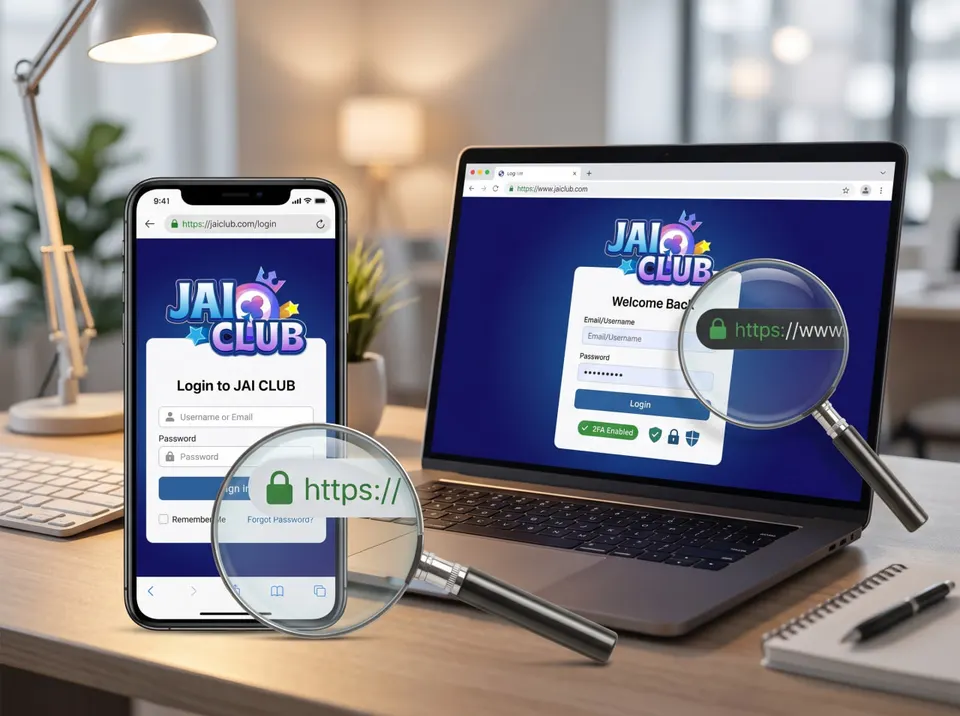
- Secure connection: Always check for HTTPS in the website URL—look for the padlock icon in the address bar. While HTTPS does not guarantee legitimacy, its absence signals a potential scam.
Why it matters:
Fake Jai Club login scam websites often have URLs that mimic the official site but differ slightly. Verifying the URL is your first step in identifying a phishing link.
2. Verify the Website's Design and Functionality
Professional design and smooth functionality are hallmarks of legitimate websites. Scammers often rush or overlook details, which can lead to telltale signs of a fake site.
What to look for:
- Low-quality graphics and pixelated images.
- Broken links or non-functional buttons.
- Unusual spelling or grammatical errors—these are common in scam sites.
- Missing contact details or customer support info.
Why it matters:
Fake sites often lack the polish of official platforms and may have errors or broken features. A legitimate Jai Club site maintains high standards in design and usability.
3. Cross-Check with Official Jai Club Sources
Always verify the login link from official Jai Club communication channels or trusted sources.
How to verify:
- Check any official Jai Club emails or notifications, if available, for the correct login link.
- Visit the official Jai Club website directly by typing the URL yourself instead of clicking links from unknown emails or messages.
- Look for official app links or QR codes published on trusted platforms.
Why it matters:
Using external references reduces the chances of falling for a Jai Club phishing link or Jai Club login scam.
4. Beware of Requests for Unusual or Excessive Personal Information
Legitimate Jai Club login pages only require your username and password. Scam sites may ask for more details like PIN codes, bank information, or OTPs.
What to look for:
- Websites asking for information unrelated to login, such as your bank account number, address, or OTP.
- Pop-up windows requesting sensitive data unexpectedly.
Why it matters:
No legitimate login process will ask for unnecessary personal data, especially outside the official site or app interface.
5. Recognize Signs of a Jai Club Phishing Link
Phishing links are designed to steal your login credentials and personal data by redirecting you to a fake website that looks authentic.
How to identify a phishing link:
- Hover over the link without clicking—check if the URL matches the official Jai Club site.
- Look out for shortened URLs or suspicious domain name variations.
- Beware of URLs with extra characters or numbers, e.g., “jaiclub123.com” or “jaiclub-login-secure.com”.
Why it matters:
Phishing links are a common Jai Club account security India concern, often leading users to input credentials into scam sites.
6. Use Browser Security Features and Antivirus Tools
Modern browsers and security software can flag suspicious websites before you log in.
Tips:
- Keep your browser updated and enable security features.
- Use HTTPS Everywhere browser extension for secure browsing.
- Scan your device regularly with trusted antivirus software.
Why it matters:
Tools can warn you about fake Jai Club login websites and help prevent account phishing scams.
7. Check for Contact Info and Customer Support Options
Official Jai Club websites generally provide clear contact information, FAQs, and support options.
What to verify:
- Look for official customer service details, such as a helpline number or email.
- Check if the website provides a physical address or legal disclaimers.
Why it matters:
A lack of contact information or unprofessional support pages can indicate a scam site aiming to phish your credentials.
Summary of Key Signs of a Fake Jai Club Login Website
| Sign | What to Check | Why It Matters |
|---|---|---|
| URL spelling or domain errors | Misspelled domain, unusual extension | Indicates phishing link or fake site |
| Poor design and functionality | Low-quality images, broken links | Signs of a scam website |
| Request for extra information | Bank details, OTP, PIN outside official app | Common in Jai Club login scam attempts |
| Suspicious URL structure | Extra characters, shortened links | Phishing link red flags |
| Lack of contact info | No helpline, support, or legal info | Possible scam site concern |
| No HTTPS or invalid security | No padlock icon, insecure connection | Security risk indicator |
By being vigilant about these signs, you can protect yourself from falling victim to Jai Club login scams and phishing links. Always stick to official channels, verify URLs, and keep your account details secure.