Colour Trading Hack vs Prediction App: What's the Real Difference?
Understand the difference between colour trading hack tools, prediction apps, Telegram signals and result charts. Learn what each tool claims, what can be verified and why prediction accuracy is often misunderstood.
In this article
- Colour Trading Hack vs Prediction App: What's the Real Difference?
- What Is a Colour Trading Hack?
- What Is a Colour Trading Prediction App?
- Colour Trading Hack vs Prediction App: Main Differences
- Can a Prediction App Know the Next Colour?
- What Does a Jai Club Colour Trading Prediction Hack Actually Show?
- Why Telegram Colour Trading Signals Can Be Misleading
- Are Colour Trading Hack Scripts Real?
- Colour Trading Hack Accuracy: What Should Be Checked?
- Prediction Apps vs Result History Charts
- Can a Hack Tool Change a Server Result?
- Common Warning Signs of Misleading Tools
- Frequently Asked Questions
- Is a Jai Club colour trading hack the same as a prediction app?
- Can colour trading prediction apps guarantee the next result?
- What is a colour trading hack script?
- Are Telegram colour trading signals accurate?
- Does a result chart predict future colours?
- Can a browser script modify a server result?
- How should prediction accuracy be assessed?
- Is a hack download required to understand colour trading?
- Conclusion
Colour Trading Hack vs Prediction App: What's the Real Difference?
Searches for a Jai Club colour trading hack often lead to applications, Telegram groups, prediction websites and downloadable scripts that claim to identify future Red, Green or Violet results. Although these tools are frequently advertised using similar language, they do not necessarily perform the same function.
A prediction app may analyse previously recorded numbers, while a so-called hack tool may claim to provide access to hidden results or influence the game's internal system. Telegram channels may simply publish guesses without explaining how those guesses were produced. These distinctions matter because a polished interface or a sequence of correct predictions does not establish that a tool has privileged access to a game's outcome-generation process.
This guide compares colour trading hacks, prediction apps, automated signals and historical charts. It explains the evidence needed to evaluate accuracy claims, the technical limits of browser-based tools and the difference between analysing previous outcomes and knowing a future result.
What Is a Colour Trading Hack?
The phrase colour trading hack is used online to describe several different types of software. Some tools claim to predict future colour results, while others advertise modified applications, secret scripts or access to internal game information.
These claims should not be treated as equivalent. A programme that displays historical trends is fundamentally different from software that claims to modify a remote game server. The former may use publicly visible information, while the latter would require technical capabilities that have not been established merely by showing a promotional video.
When researching Jai Club colour trading hack tools, readers should examine the exact claim being made. Does the tool provide a chart, generate a guess, display a previously completed result or claim to change the underlying outcome? Each function requires different evidence.
What Is a Colour Trading Prediction App?
A colour trading prediction app usually presents an estimated future number or colour based on some form of calculation. The calculation may use previous results, frequency counts, sequences, user-entered data or an undisclosed algorithm.
For example, an app might count how often Red or Green appeared across the last 20 rounds and then display a suggested colour. That is a form of historical analysis. It is not proof that the app knows the next outcome, especially where the game uses independently generated results.
Prediction apps can also create the appearance of accuracy by displaying selected successful examples. Without a complete record of every prediction made before each result was published, such examples provide little evidence of dependable performance.
Colour Trading Hack vs Prediction App: Main Differences
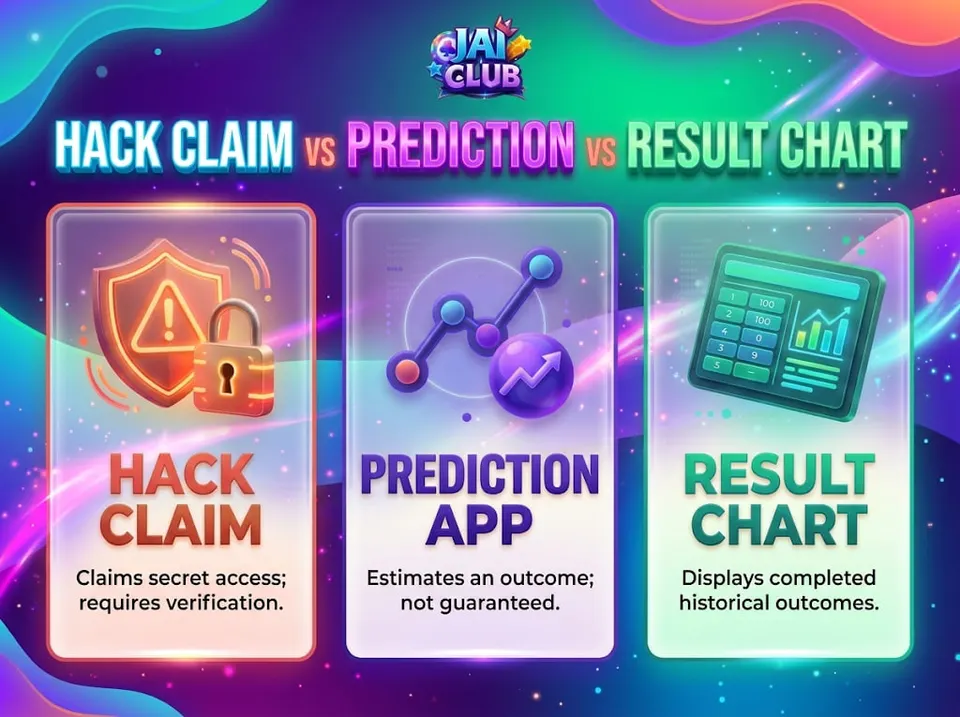
A claimed hack and a prediction app may use similar graphics but make fundamentally different promises. One may suggest that a hidden system has been accessed, while the other may simply estimate a future outcome using visible data.
| Feature | Claimed Hack Tool | Prediction App |
|---|---|---|
| Main claim | Hidden access or control | Forecasting future results |
| Typical input | Claimed scripts or private data | Historical outcomes |
| Evidence needed | Demonstrable authorised technical access | Complete timestamped prediction record |
| Server control established? | Not by advertising alone | No |
| Guaranteed accuracy? | Not established | Not established |
| Common risk | Malware or credential theft | Misleading accuracy claims |
A result chart is different from both. It is primarily a record of completed outcomes, even when it includes additional statistics or coloured trend lines.
Can a Prediction App Know the Next Colour?
An application that only receives historical results does not automatically gain knowledge of the next result. If a game produces independent random outcomes, earlier values do not determine later ones.
Suppose a chart shows Green in four consecutive rounds. A prediction app might decide that Red is more likely next, or it might assume the Green sequence will continue. Neither conclusion becomes reliable merely because a visible streak exists.
A genuine claim of forecasting accuracy requires evidence collected over many predictions under clearly defined conditions. The predictions must be recorded before the results occur, and unsuccessful predictions must remain in the dataset rather than being deleted.
What Does a Jai Club Colour Trading Prediction Hack Actually Show?
Some tools labelled as Jai Club colour trading prediction hacks display a countdown, a recommended colour and a confidence percentage. These elements can make an interface appear sophisticated, but they do not independently establish a connection to the game provider's internal systems.
A countdown can be generated from a publicly known round schedule. A recommended colour can be chosen randomly or calculated from past results. A confidence percentage can be displayed without being statistically calibrated.
The correct question is not whether the interface looks technical. It is whether the advertised capability has been independently demonstrated through reliable evidence.
Why Telegram Colour Trading Signals Can Be Misleading
Telegram groups sometimes publish signals for upcoming game periods. A message may contain a period number, a colour selection and a claim that the recommendation comes from an advanced algorithm or private source.
A small collection of successful signals is not enough to verify accuracy. A channel administrator could publish several different predictions in separate groups, remove unsuccessful posts or highlight only the outcomes that happened to match earlier messages.
Readers evaluating a Telegram signal channel should consider whether a complete, independently timestamped history of predictions exists. Even such a history would demonstrate past performance only, not guarantee future accuracy.
Are Colour Trading Hack Scripts Real?
Scripts are ordinary computer programmes. They can automate calculations, arrange displayed information or interact with a website's visible interface, depending on their permissions and design.
However, a browser script cannot be assumed to control a remote server simply because it changes something visible on the screen. Changing a number in a local interface is not the same as changing the outcome stored by the service.
A colour trading hack script claiming to control results would need credible technical evidence supporting that capability. Promotional screenshots and edited videos do not meet that standard.
Colour Trading Hack Accuracy: What Should Be Checked?
Accuracy claims should be evaluated against a complete set of timestamped predictions. The number of successful forecasts alone is insufficient because readers also need to know how many forecasts were made, which outcomes were eligible and whether the method changed during testing.
For example, claiming 18 correct predictions sounds impressive until the total number of attempts is known. Eighteen correct predictions out of 20 is very different from 18 out of 100. Without the denominator and clearly defined scoring rules, a success count is not meaningful.
The same problem applies to screenshots announcing a 90% or 95% success rate. A percentage without documented testing conditions is simply an unverified claim.
Prediction Apps vs Result History Charts
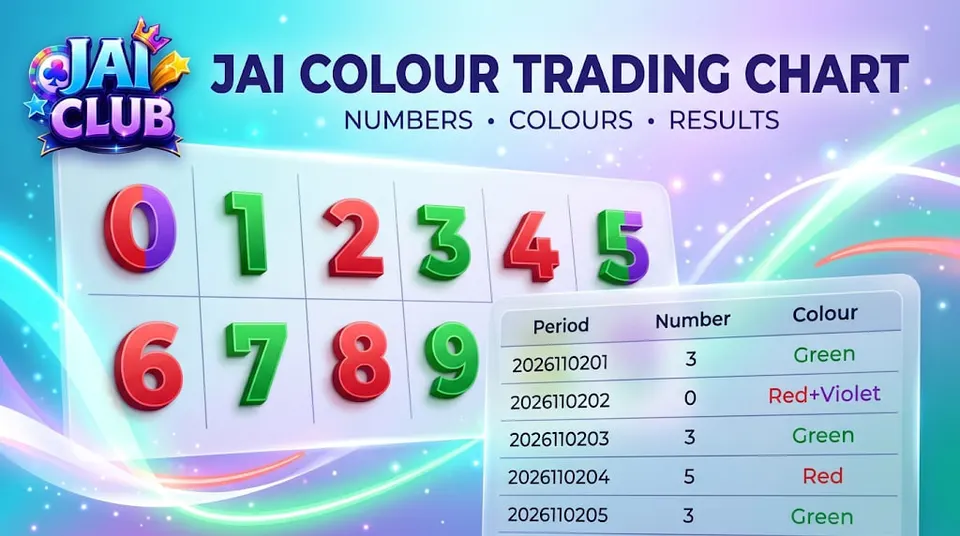
A result-history chart records completed rounds. It may display the result digit, colour classification, period identifier and other descriptive information. These records can help users understand how the interface presents outcomes.
A prediction app adds an estimate about something that has not yet happened. The distinction is important because presenting historical data accurately does not establish an ability to forecast future results.
Readers interested in general game explanations can explore the educational material on Jai Club Game, including topics covering WinGo results, Colour Trading and game terminology.
Can a Hack Tool Change a Server Result?
A remote game outcome is typically managed by the service's backend rather than by ordinary visual elements in a browser. A programme running on a user's device does not automatically have permission to alter that backend.
Some fraudulent demonstrations exploit this distinction by modifying the locally displayed text or animation. The change can be visible to the person recording a demonstration without affecting any result held by the service.
Therefore, a tool that visually changes a displayed number has not demonstrated that it can change the actual recorded outcome.
Common Warning Signs of Misleading Tools
One warning sign is a promise of guaranteed predictions. Another is a demand for account credentials, one-time passwords or sensitive financial information before the app can supposedly display its results.
Readers should also be cautious when a tool asks them to disable device protections or install unfamiliar applications from an anonymous link. Such requirements may create security risks unrelated to the stated prediction feature.
A credible explanation should be transparent about the tool's data sources, limitations and methods. Claims of secret access without independently verifiable evidence deserve particular scrutiny.
Frequently Asked Questions
Is a Jai Club colour trading hack the same as a prediction app?
No. A claimed hack may suggest privileged access or manipulation, while a prediction app generally attempts to estimate outcomes using available data. Neither claim should be accepted without evidence.
Can colour trading prediction apps guarantee the next result?
No reliable guarantee follows from historical analysis alone. A prediction app should not be assumed to know future outcomes.
What is a colour trading hack script?
It is a term often used for code that claims to automate predictions or influence a game. Its actual capability depends on what the code does and which systems it can legitimately access.
Are Telegram colour trading signals accurate?
A channel's accuracy cannot be established from selected screenshots or successful examples. Complete timestamped records are needed to evaluate its claims.
Does a result chart predict future colours?
A chart primarily organises previous results. Historical records do not independently reveal future outcomes.
Can a browser script modify a server result?
Changing what appears locally in a browser does not establish control over the outcome recorded on a remote server.
How should prediction accuracy be assessed?
A credible evaluation requires every prediction, its timestamp, the corresponding verified result and a consistent scoring method.
Is a hack download required to understand colour trading?
No. Game terminology, number classifications and result-history concepts can be explained without installing unfamiliar software.
Conclusion
The difference between a colour trading hack and a prediction app lies primarily in what each tool claims to do. A prediction app may analyse previous outcomes, while a claimed hack may advertise access to hidden information or control over game results. Neither type of claim becomes reliable merely because it is accompanied by a professional-looking interface.
Result charts, Telegram signals and browser scripts should also be understood according to their actual capabilities. Historical data can be organised and displayed, but that does not automatically make future outcomes predictable.
For further independent explanations of colour trading and related game formats, visit jaiclub-game.com. This article provides educational information and does not recommend or distribute unauthorised software.